News
 Projects
& Exhibitions Projects
& Exhibitions
PUBLICATIONS
>
Contact
|
 |
Selected
recent printed projects, reviews and catalogues
For further information, copies, scans, etc please contact the studio.
[BOOKS AND PRINTED
PROJECTS]
| 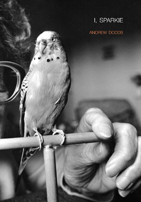
'I, Sparkie', published and commissioned by Information as Material, 2013, supported by the Henry Moore Foundation. Perfect bound, full colour, 80pp, with audio CD.
ISBN: 9781907468179
Press Release here
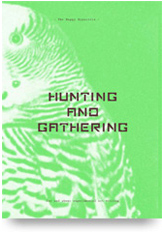
'Deep
in the Uncanny Valley' commissioned for Happy Hypocrite,
issue2, Hunting and Gathering, 2008. Other contributors
include Thomas Hirschhorn, Gabriel Lester, Brian Dillon, Marie Darrieussecq
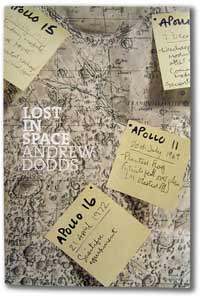
'Lost
in Space', commissioned by Book Works, London, 2006
ISBN: 1870699769
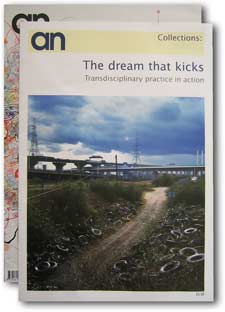
'Blood n Guts' commission
for an Collections, an magazine, October 2006
|
|
'A PATTERN TO MAKE THE CITY BY', commissioned by CCA Derry-Londonderry for the exhibition Contours of the Common, 2012.
Design: puredesign
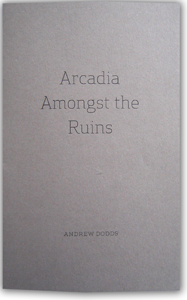
'Arcadia Amongst the Ruins', fieldguide published as
part of the project New Sites - New Fields, Leitrim
Sculpture Centre, Ireland, 2008. 16pp, softback cover.
Design: ValleWalkley
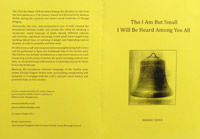
'Tho I Am But Small I Will Be Heard Among You All', 2011, published for the bell ringing event of the same name.
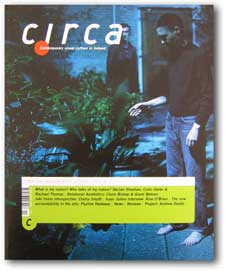
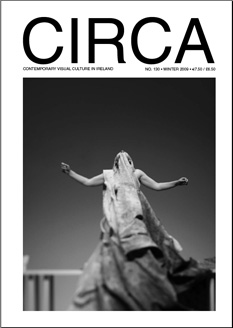
'In
the Beginning...', artist's project for Circa issue
114, Ireland's contemporary art magazine, 2005
|
|
|
|
Artist Andrew Dodds’s beautiful new book is a marvelous and complex case study in the culture of nature. This lush volume makes a significant contribution to the blooming field of animal studies by highlighting how animals are themselves – how animals are highly differentiated individuals.
Mark Dion on I, Sparkie
This book is a testament to Andrew Dodds’s commitment to offering a new perspective on our relationship with nature and with seemingly fleeting, yet distinctive moments in our recent history. Experiencing this project and hearing this talking bird again, reanimated, does exactly what great artworks do... It shifts our understanding of the things we think we know and creates genuine new insights.
Alessandro Vincentelli on I, Sparkie
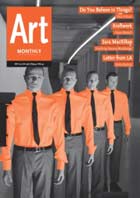
The ensemble congeals once the camera is turned off and only then, at the moment of their disappearance, do we hear the diverse and distracted musicians and their music become one. When is an ensemble an ensemble? Is a symphony a ‘thing’? What if a piece of music is performed differently and by different musicians for centuries? Where is its essence, its identity? Frankly, where is it? It might be easier to say, ‘When is it?’ Perhaps music only lies in its score, in the instructions and commands that once inspired conceptualists like Sol LeWitt and LaMonte Young. (Here we can see a similarity with our new sense of ourselves as the product of genetic code.) But numbers and letters, paper and ink do a disservice to the special event of music that occurs in our ears even when other senses are denied to us. Dodds is right, music has much to tell the visual arts about things.
Paul O'Kane, on Alive! in 'The Thing', Art Monthly, issue
356, May 2012
Utilising
some of the strategic tools developed by ‘Institutional
Critique’ practices from the 1960s onward the actual
focal point of the exhibition looked to be the ‘problematic’
role of the artist in promoting cultural regeneration [...]
Andrew Dodds’s audio work Adrift takes BBC Radio 4’s Shipping Forecast and removes all
the words except that of “falling”. This word
punctuates the long silences left through the deletion of
the other elements of the original broadcast leaving a trace
of collapse. Delivered in the evocative tones of Received
Pronunciation, issues around class, decision-making and power
are brought to mind. As such Adrift mirrors and reinforces
the overall curatorial remit of Arcade itself.
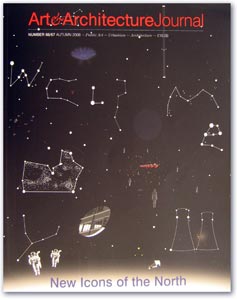
'Arcade: Moments not Monuments', Craig Martin in Art
& Architecture Journal, issue 66/67; indepth article
on Arcade
The fallacy of reinterpreting the Galapagos's diverse ecosystem
as an English landscape from the overlapping eras of Romanticism
and Colonialism has inspired Dodds's commission, After
the Deluge [...] searing through each of the images
is the faltering haiku-like narrative of a dark and disquieting
journey. These broken texts haunt our vicarious sightseeing
with echoes of Joseph Conrad's Heart of Darkness (1902) and Patrick Keiller's Robinson in Space (1997)
each of which complicate the inscription of identity onto
an unsympathetic landscape.
Robert Blackson, essay in North + South
exhibition catalogue
Greeting us at the event is a choir of little girls eerily singing All Things Bright and Beautiful, in a disembodied sound piece by Andrew Dodds that seems to haunt you wherever you are in the room. The caption informs us that Britain’s first creationist academy has opened in Gateshead. But Dodds is surely not trying to placate the local flat-earthers with this tribute to God’s creatures great and small. Neither is he deliberately seeking to annoy them. Instead, the ethereal voices of the singing kids have a persuasive sweetness to them that successfully fills the show with doubts.
Waldemar Januszczak, review of 'A Duck for Mr Darwin', The Sunday Times, Culture, 26 April 2009
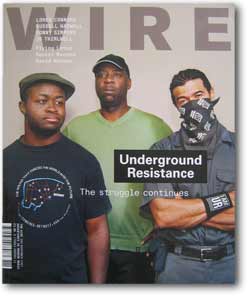
The most successful works tended both to stick close to the
site itself and at the same time conjure an invisible elsewhere.
While it was easy, as a visitor, to get the sense that this
land was somehow moribund without artistic resuscitation,
Andrew Dodds’ s Alive!,
a notional soundtrack to a horror film, [composed and] performed
by local teenagers, reminded us that these edge-lands are
also somebody’s backyard, childhood playground and adolescent
refuge.
Brian Dillon, Wire, review of Grain
The dream that kicks: transdisciplinary practice in action
is a curious collection of works which at once demonstrates
and queries its subject. Here, the form is considered in tandem
with the content [...] Andrew Dodds's Blood 'n' Guts,
is perhaps the most self-reflexive piece. It can be read either
as a whole, or as separate works in their own rights; thereby
creating a system of works, with multiple entry and exit points,
and as such provides an essentially transdisciplinary reflection
on the main concerns of this collection as a whole.
The Dream that Kicks.., Maria Fusco from the
Afterword
|
| |
'Navigations, Art as Research' exhibition catalogue. Soft cover, full colour, 180pp
ISBN:
9780957099685
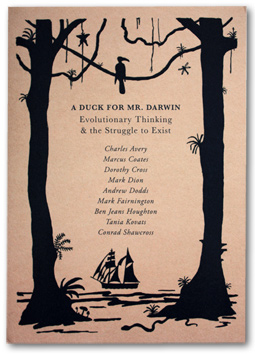
A Duck for Mr Darwin, BALTIC Centre for Contemporary Art, 2009. Artists include Mark Dion, Charles Avery, Tania Kovats and Conrad Shawcross. Exhibition curated by Alessandro Vincentelli as part of Darwin 200 celebrations.
Catalogue available from Cornerhouse, Manchester
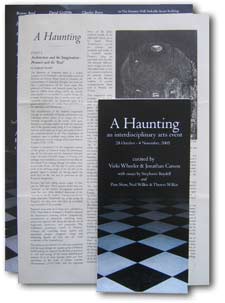
'A Haunting',
The Statuary Hall, University of Manchester, 2005. Includes
poster, booklet and essays by Stephanie Boydell, Pam Shaw,
Neil Wilkie and Theresa Wilkie
|
|
'Among Other Things' exhibition catalogue. Artists: Adam Chodzko, Andrew Dodds, Kelly Large, Nicoline van Harskamp.
With an essay by Craig Martin.
Soft cover, copper ink, 30pp.
ISBN: 9781908971029
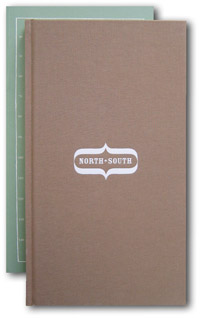
'North
& South', Vardy Gallery, University of Sunderland,
2007. Includes essays by Robert Blackson, Billy Bragg,
Ros Carter, Tim Craven, Peter Davidson and others. Available
in hard and soft cover from Cornerhouse, Manchester
|
|
|
|